Commercial freezers come in more shapes than most people expect. There are tall uprights, freezers that fit under a bench, chest freezers, display freezers for ice cream and frozen meals, and blast chillers that freeze food fast. Each suits a different job. This guide explains the main types, the temperatures they run at, and how to choose the right one for your business.
Commercial freezer types at a glance
| Type | Typical temperature | Best for |
|---|---|---|
| Upright freezers | -18 to -22°C | Main frozen storage in kitchens, with easy access to shelves |
| Underbench freezers | About -15 to -22°C | Frozen stock right at the workstation or bar |
| Chest freezers | -18 to -22°C | Bulk storage and stock you don't need every minute |
| Display freezers | About -15 to -18°C | Ice cream and frozen meals on show in shops |
| Gelato and ice cream display freezers | About -12 to -18°C | Scooping and showing gelato and ice cream |
| Blast chillers and freezers | Pull food from +70°C down to +3°C or -18°C, fast | Cooling and freezing cooked food quickly and safely |
| Bakery freezers | About -18°C | Dough and pastries on bakery trays |
| Dual temp fridge freezers | Fridge and freezer sides | Small kitchens that need both in one footprint |
| Ice boxes | About -10 to -15°C | Bagged ice for sale at service stations, bottle shops and events |
The temperatures are typical ranges from the models in our range. Check the product page for each model.
Upright freezers
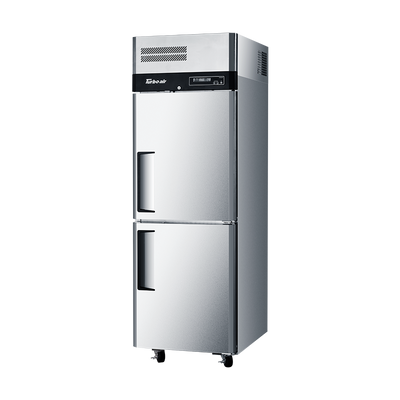
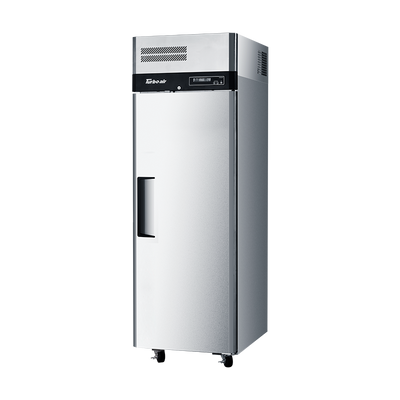
The workhorse of most commercial kitchens. Shelves at eye level make it easy to see and grab stock, and they take up less floor space than a chest freezer of similar capacity. They come with one, two or three doors, solid or glass. Most are fan-forced with automatic defrost, and many are rated for hot kitchens up to 43°C.
Choose an upright if: you open the freezer often during service, floor space is tight, or you want stock organised on shelves.
Underbench freezers
Underbench freezers put frozen stock exactly where it's used: under the prep bench, beside the fryer or behind the bar. Some are compact enough for a small café or bar. A glass door version suits dessert counters that want ice cream or frozen fruit on show.
Choose underbench if: you want frozen items within arm's reach of a workstation, or you're short on floor space.
Chest freezers
Chest freezers hold a lot of stock in a simple, robust cabinet. Cold air doesn't spill out when the lid opens the way it does from an upright door. They suit bulk storage, butchers, takeaways and backup storage. The trade-off is access: finding something at the bottom means lifting out what's on top, so baskets and good labelling help. Glass-lid chest freezers double as display freezers in shops.
Choose a chest freezer if: you store bulk stock, don't need to get at it constantly, and have the floor space.
Display freezers
Glass door display freezers and multideck display freezers show ice cream, frozen meals and other frozen lines to customers in supermarkets, convenience stores and cafés. They are built to keep stock frozen while shoppers browse, but they're usually rated for air-conditioned retail conditions (often 25°C), so placement matters.
Choose a display freezer if: customers serve themselves from it.
Gelato and ice cream display freezers
Gelato and ice cream are served warmer than they're stored, so they're soft enough to scoop and look their best in the pan. Gelato display freezers run warmer than storage freezers, often around -12 to -18°C, with curved or straight glass and room for a set number of pans. Scooping freezers with a sneezeguard over glass lids suit kiosks and smaller dessert bars. Keep backup stock in a storage freezer at a colder temperature.
Choose a gelato display if: you scoop and serve gelato or ice cream.
Blast chillers and blast freezers
A blast chiller isn't a storage freezer. It pulls hot food down to fridge or freezer temperature fast, using very cold, fast-moving air. Some models run the cabinet as low as -40°C. That helps kitchens meet the cooling rule for cooked food (60°C to 21°C within 2 hours, then to 5°C within a further 4) and keeps the texture of frozen food better than slow freezing. Once food is chilled or frozen, it moves to a fridge or storage freezer.
Choose a blast chiller if: you cook in batches, cook-chill or freeze your own products.
Bakery freezers
Bakery freezers have tray runners instead of shelves, sized for bakers trays or 600 x 400mm trays, so dough and pastries go straight from the bench to the freezer on the tray.
Dual temp fridge freezers
A fridge and a freezer in one upright cabinet, each side with its own controls. Good for small cafés and takeaways that need both but only have room for one cabinet.
How to choose
- How often do you open it? Constantly during service: an upright or underbench freezer. Now and then: a chest freezer.
- Do customers see it? If so, a display, gelato or glass-lid chest freezer.
- Do you need to freeze food, or just keep it frozen? Freezing cooked food fast is a blast chiller's job. Storage freezers aren't designed to pull down hot food.
- How hot is the room? Ratings vary from about 25°C for retail display freezers to 43°C for kitchen models. See where to put a commercial fridge.
- What does it cost to run? Freezers use more power than fridges, and glass doors use more again. Compare models with our running cost calculator.
Freezer FAQs
What temperature should a commercial freezer be?
Most commercial storage freezers run at about -18 to -22°C. Gelato display freezers run warmer, so the product is soft enough to scoop.
Is a chest freezer or an upright freezer better?
Uprights are easier to organise and better for stock you grab often. Chest freezers hold more bulk stock and lose less cold air when opened, but they take more floor space and are harder to dig through.
Can I use a blast chiller as a normal freezer?
It isn't designed for long-term storage. Use it to bring food down to temperature quickly, then move the food to a fridge or storage freezer.
Can a freezer go in a hot kitchen?
Yes, if it's rated for it. Many kitchen freezers are rated for rooms up to 43°C, while retail display freezers are often rated for 25°C. Check the product page.