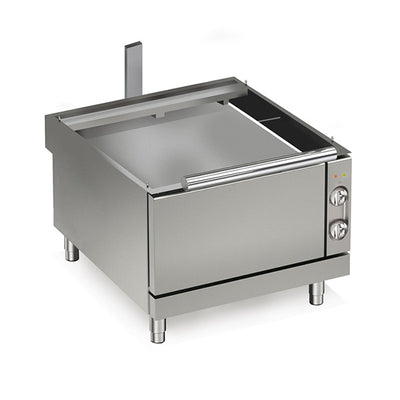
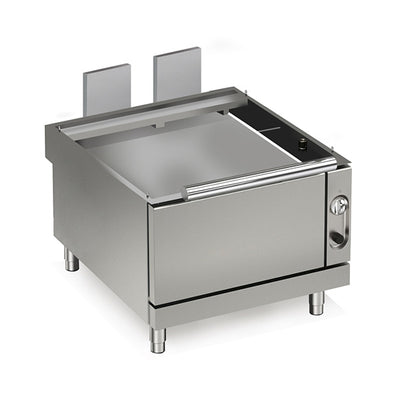
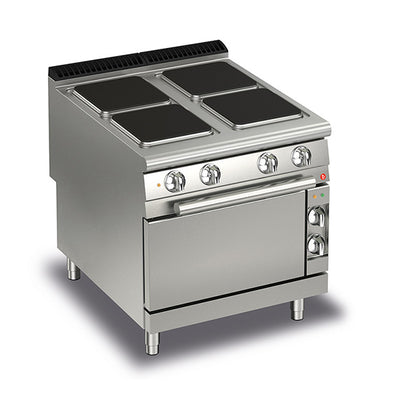
A restaurant kitchen equipment list is easiest to build station by station, following the food from the delivery door to the pass. Most restaurants need storage (coolroom shelving, upright fridges and freezers), prep (benches, a food processor, a slicer and a prep fridge), a cooking line (oven range, chargrill or griddle, fryer, combi or convection oven, salamander and exhaust hood), heat at the pass, a cold line under the cooks, warewashing and a bar.
Your menu sets the details. A grill-led menu needs more chargrill space, while braises and roasts lean on the oven. Use the checklist below, then work through the "before you buy" checks before you order.
Restaurant kitchen equipment checklist
| Station | Equipment | Check before you buy |
|---|---|---|
| Receiving and storage | Coolroom shelving | Rust-proof material, load per shelf, depth |
| Receiving and storage | Upright fridges and freezers | Width and height against your doorways |
| Prep | Benches and sinks | 304 grade for wet areas, splashbacks |
| Prep | Food processor, veg prep, slicer | Batch size, cuts you need, safety guards |
| Prep | Prep fridge | GN pan layout, lids, ambient rating |
| Cooking line | Oven range | Burner count, oven size, MJ/h |
| Cooking line | Chargrill or griddle | Width, plate type, MJ/h or kW |
| Cooking line | Fryers | Oil capacity, gas or electric, filtering |
| Cooking line | Combi or convection oven | GN tray capacity, water and drain |
| Cooking line | Salamander | Fixed or adjustable height, power supply |
| Cooking line | Exhaust hood | Covers the whole line, council approval |
| Holding and pass | Heat lamps, hot holding | Holds food at 60°C or above |
| Cold line | Chef drawers, undercounter fridges | Fits under the line, drawers or doors |
| Warewashing | Pass-through dishwasher, benches, pot washer | Rack size, clearance, power, drain |
| Bar | Bar fridges, glasswasher, ice machine | Ambient rating, drain, kg per 24 hours |
Receiving and storage
Coolroom shelving
Every item in the coolroom and dry store should sit on shelving, off the floor, with the evaporator fan kept clear. Choose shelving made for cold, damp rooms, such as poly shelving with vented polymer plates rated to 250kg per shelf. See coolroom shelving, and add a trolley or two for moving stock in from the door.
Upright fridges and freezers
Uprights handle daily storage if you have no coolroom, and overflow if you do. Keep chilled food at 5°C or below, and check each cabinet's width and height against every doorway on the way in. Browse upright fridges and upright freezers.
Prep
Benches and sinks
Use 304 grade stainless steel where benches get wet or touch food, add splashbacks where they meet a wall, and plan separate sinks for food prep and washing up. See stainless steel benches.
Food processors and veg prep
Bowl-style cutter mixers chop and mix, while veg prep machines slice and cut vegetables through interchangeable discs. Some models combine both. Choose by what you prep most and how much. See food processors.
Slicer
Worth adding if you slice meats, cheese or vegetables in-house. Keep blade guards in place, never bypass safety interlocks, and train staff before they use it. See food slicers.
Prep fridge
A refrigerated prep station holds ingredients in GN pans on top, with storage below. Sandwich, salad and pizza versions differ mainly in pan layout and work surface. See food prep stations.
Cooking line
Oven range
Open burners with an oven below are the core of most lines. Count the burners you need at your busiest service, and note the gas rating: the Baron Q70PCF/G1205, a six-burner range with a gas oven in 1200mm, is rated at 157 MJ/h on its own. See oven ranges.

The Baron Q70PCF/G1205 six-burner gas range is part of the 700mm deep Queen 7 line, so it lines up flush with other Queen 7 units.
Chargrill or griddle
A chargrill cooks over open grates and leaves grill marks. A griddle cooks on a solid flat plate, which suits eggs, burgers and seared items. Choose by your menu, or run one of each. See chargrills and griddles and hotplates.
Fryers
Size oil capacity to your fried menu, choose gas or electric to suit your supply, and plan how oil will be filtered. Keep a wet chemical (Class F) extinguisher and a fire blanket nearby. See deep fryers.
Combi or convection oven
Capacity is usually given in GN trays, such as 6, 10 or 20 × GN 1/1. A convection oven bakes and roasts with fan-forced heat. A combi oven adds steam and needs a water connection and drain, and water treatment is commonly recommended (check the warranty terms). Compare combi ovens and convection ovens.
Salamander
A salamander browns, melts and finishes plates from above. Choose fixed or adjustable height, and check the power supply on the spec sheet: the Benchstar AT-937E is hard-wired, and the Baron SE60/0CB needs a 20 A supply. Salamanders sit in the same grills range as chargrills.
Exhaust hood
Most commercial cooking set-ups need a mechanical exhaust hood, with requirements set by building rules and AS 1668.2. Whether a ventless hood can be used depends on the appliances under it and approval from your council or building certifier. See exhaust hoods.
Holding and the pass
Heat lamps and overhead strip warmers keep plated food warm between the line and the floor. Hot holding cabinets keep cooked food at 60°C or above for longer. Both are made to keep hot food hot, not to cook or reheat it. See heat lamps and hot food displays and hot holding cabinets.
Cold line
Refrigerated chef drawers, or chef bases, keep proteins and prepped ingredients right under the cook. Many are built to carry cooking equipment such as chargrills, griddles and fryers on top, so check the base is at least as wide as what sits on it. Undercounter fridges with doors suit garnish and cold starter stations. See chef drawers and undercounter fridges.
Warewashing
A pass-through (hood type) dishwasher suits restaurant volumes: dirty racks go in from one side and come out clean on the other. The Adler ECO1000, for example, takes 500 × 500mm racks with 420mm clearance, runs 1 or 3 minute cycles and comes in 400 V three-phase or 240 V 15 A versions. Pair it with inlet and outlet benches, and add a pot washer if you wash large pots and trays every day. See pass-through dishwashers, dishwasher benches and pot and utensil washers.
Bar
A restaurant bar usually needs glass-door bar fridges (check the ambient rating, as bars run warm), a glasswasher and an ice machine. Ice output is rated in kg per 24 hours, separately from bin size. Ice-machine makers commonly quote about 0.7kg per customer per day for restaurants and about 1.4kg per seat for bars; treat these as rough guides and add about 20%.
Our tip: Take your three best-selling dishes and trace each one on your floor plan, from coolroom to prep, line and pass. If a dish crosses another station's path or doubles back, move that piece of equipment on the plan before you order, not after it's installed.
Before you buy
A restaurant kitchen puts the biggest load on your power, gas and exhaust, so check these before you lock in the cooking line:
- Exhaust: the hood has to suit the appliances under it, so talk to your council and a ventilation specialist before you choose the cooking line.
- Hand basins: food premises need hand washing facilities, so mark dedicated hand basins on your layout from the start.
- Power and gas: list every appliance with its electrical rating and gas MJ/h, and have a licensed electrician and gasfitter confirm the building can run them all at once.
Our pre-order checklist explains power, gas, water, exhaust, council registration and delivery in detail.
Frequently asked questions
What equipment does a small restaurant need first?
Start with what every dish depends on: cold storage, a prep bench and sink, a range, an exhaust hood, a hand basin and a dishwasher. Add a fryer, chargrill, combi oven or salamander as your menu requires.
Should I choose gas or electric cooking equipment?
It depends on your supply and menu. Check whether you have natural gas or will use LPG, and whether your switchboard can take more load or three-phase equipment. Your gasfitter and electrician can tell you what your site can handle.
Who connects the equipment?
Installation isn't included. Gas appliances must be connected by a licensed gasfitter, three-phase or hard-wired equipment by a licensed electrician, and dishwashers and combi ovens by a licensed plumber.
Can I get one quote for a whole restaurant fit-out?
Yes. Send your equipment list or plans through our quote form, and we'll reply by email with one package price including freight.
Work through the list station by station, check the services each item needs, and you'll have a clear order list. If you'd like a second opinion on your list, ask us a product question, or request a free fit-out quote for the whole kitchen.