

How to Store Food Safely in a Commercial Fridge and Freezer
How you store food in a commercial fridge or freezer matters as much as the fridge itself. The right temperature, the right shelf order, good labelling and a tidy freezer keep food safe, cut waste and make inspections easier. This guide covers the key temperatures, how to set out your fridge shelves, preventing cross-contamination, cooling and thawing food, and organising a commercial freezer.
This is general guidance. Your food safety program, your local council and the Food Standards Code set the rules that apply to your business.
The key temperatures
| What | Temperature |
|---|---|
| Chilled potentially hazardous food (meat, dairy, seafood, cooked food, cut salads) | 5°C or colder |
| Frozen food | Kept frozen hard. Most commercial freezers run at about -18°C. |
| Cooling cooked food | 60°C to 21°C within 2 hours, then to 5°C within a further 4 hours |
Businesses that handle potentially hazardous food must have a thermometer that measures food temperature to within 1°C. Use it to check food, not just the fridge display, and record checks if your food safety program asks for it.
How to set out fridge shelves
The rule is simple: ready-to-eat food above, raw food below, so nothing raw can drip onto food that won't be cooked again. A common order, top to bottom:
- Top: ready-to-eat and cooked food, such as prepared salads, cooked meats, desserts and leftovers.
- Middle: dairy, eggs and prepared ingredients.
- Lower: raw seafood and whole cuts of raw beef, lamb and pork.
- Bottom: raw mince, sausages and raw poultry, which need the most thorough cooking.
If you can, keep raw meat in a separate fridge or a dedicated section altogether. Keep everything off the floor of the cabinet, and don't block the fan or air vents.
Preventing cross-contamination
- Cover everything. Use lidded containers or wrap, and keep raw meat in sealed containers or trays that can't leak.
- Keep raw and ready-to-eat apart, with raw always below.
- Store allergens carefully. Keep foods like nuts, sesame, seafood and dairy in sealed, labelled containers, so they can't spill onto other food.
- Clean spills straight away, especially raw meat juices.
- Use clean containers, and don't top up an old container with new stock.
Labelling and stock rotation
- Label prepared food with what it is, the date it was made and its use-by date.
- Use first in, first out (FIFO): new stock goes behind older stock.
- Check use-by dates daily and throw out anything past it.
- Use clear containers where you can, so staff find things without holding the door open.
Cooling hot food properly
Hot food shouldn't sit on the bench for hours to "cool down", and big pots shouldn't go straight into a storage fridge. Cooked food must cool from 60°C to 21°C within 2 hours, then to 5°C within a further 4 hours. To get there:
- Divide large batches into shallow containers.
- Use an ice bath or stir to release heat faster.
- Use a blast chiller if you cook in volume. It's built to pull food down quickly and safely.
- Leave containers uncovered or loosely covered while they cool, then cover them once cold.
Thawing frozen food
- Thaw in the fridge, on a tray on the bottom shelf, not on the bench.
- Allow enough time. Large items can take a day or more.
- Once food has thawed, don't refreeze it unless you've cooked it first.
Organising a commercial freezer
- Zone it. Keep meat, seafood, vegetables, baked goods and desserts in their own areas, with raw meat below ready-to-eat items.
- Use baskets and bins so you can lift out a whole category instead of digging with the lid or door open.
- Label and date everything, and rotate stock so the oldest is used first.
- Wrap food airtight. Air causes freezer burn, which dries out and spoils food.
- Don't overfill. Leave space around the fan and vents, and in chest and display freezers, don't stack above the load line.
- Keep the door or lid shut. Know what you need before you open it.
Keep the fridge itself in good shape
Safe storage depends on a fridge that holds its temperature. Keep it clean, keep the door seals in good order and clean the condenser regularly. See how to clean a commercial fridge and our maintenance checklist. If a fridge stops holding 5°C, our fridge not cooling guide explains what to do first.
Food storage FAQs
What temperature should a commercial fridge be for food safety?
Chilled potentially hazardous food must be kept at 5°C or colder, so most commercial fridges are set a little below that. Check the food temperature with a probe thermometer.
Where should raw meat go in a commercial fridge?
Below ready-to-eat food, on the lower shelves, in sealed containers. Raw poultry and mince go at the very bottom.
Can I put hot food straight in the fridge?
Small amounts in shallow containers, yes. Large pots of hot food warm up everything around them and cool too slowly, so divide them up or use a blast chiller to meet the 2-hour/4-hour cooling rule.
How long can food be kept in a commercial freezer?
Frozen food stays safe while it's frozen, but quality drops over time. Label everything with the date it went in, use the oldest first, and follow your supplier's guidance for each product.
More reading
Shop the range
Browse our upright fridges, upright freezers and blast chillers, all priced below RRP with delivery Australia-wide.
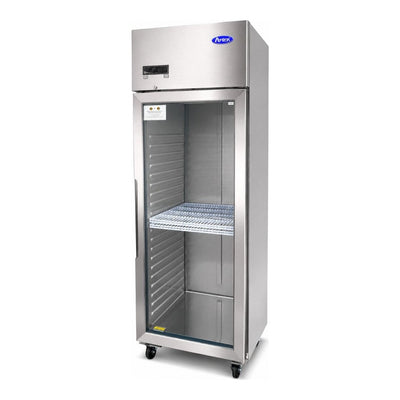 Atosa JCF40RSGR - 1 Glass Door Upright Fridge 654mm 552L
 Atosa JCF80RSGR - 2 Glass Door Upright Fridge 1314mm 1090L
 Atosa MBF8004 - Top Mounted Single Door Refrigerator
Not sure which model suits you? Ask our team or request a free quote.


