

Commercial Fridge Maintenance Checklist: How to Make Your Fridge Last Longer
A commercial fridge works hard all day, every day, so a little regular care goes a long way. The habits in this guide help your fridge hold its temperature, use less power, break down less often and last longer. Some jobs you can do yourself in a few minutes. Others need a licensed refrigeration technician. Here's the checklist, and which jobs are which.
The maintenance checklist
Every day
- Check the temperature with a fridge thermometer, not just the display, and record it if your food safety program asks you to.
- Make sure the doors close fully and haven't been left ajar.
- Keep the air vents inside clear of stock.
- Wipe up spills.
Every week
- Clean the door seals and look for tears or flat spots.
- Check nothing is stacked against the cabinet or blocking the air flow around it.
- Listen for new noises and look for water on the floor or ice building up inside.
Every month
- Clean the condenser (more often in greasy or dusty areas). See how to clean a commercial fridge for the steps.
- Do the paper test on the door seals. Close the door on a sheet of paper; if it slides out easily, the seal isn't gripping.
- Deep clean the inside.
- Check the fridge is level and the doors swing closed properly.
Once a year
- Have a licensed refrigeration technician check the fridge over. Book it before your busiest season or the hottest months.
Jobs you can do yourself
Keep the condenser clean
This is the single biggest thing you can do. A clogged condenser can't get rid of heat, so the compressor runs longer and hotter. Brush or vacuum it with the power off, following your manual. Some warranties require it: NovaChill, for example, asks for a monthly clean to keep the condenser fan motor covered.
Look after the door seals
Clean them weekly and test them monthly. A torn or flattened seal lets warm, moist air in, which makes the fridge work harder and causes frost and condensation. Replacement seals need to match your model, so have the model number handy when you order one.
Give it room to breathe
Leave the clearance around the cabinet that the manual asks for, and don't stack boxes on top or against the vents. Keep fridges away from ovens, fryers, dishwashers and direct sun. Every commercial fridge has a maximum room temperature it's designed for. If your kitchen or shop gets hotter than that in summer, the fridge will struggle.
Load it properly
- Don't overpack it or block the air vents, because cold air needs to move around the food.
- Cover food and keep it off the floor of the cabinet.
- Cool cooked food quickly before it goes in. Food safety rules require cooked food to cool from 60°C to 21°C within 2 hours, then to 5°C within a further 4 hours. Shallow containers or a blast chiller help. Don't put large pots of hot food straight into a storage fridge.
- Restock in batches rather than many small trips, so the door isn't open all day.
Check the temperature
Cold food should be kept at 5°C or colder. Most fridges are set a little below that to allow for door openings. Most commercial freezers run at around -18°C. Check with a thermometer in the middle of the cabinet. A fridge that's slowly getting warmer over a few weeks is an early warning sign.
Keep the paperwork
Keep the manual, the warranty details and a simple record of cleaning and any repairs. It helps with warranty claims and food safety inspections, and tells a technician what's already been done.
Jobs for a licensed refrigeration technician
Some work must be done by a licensed technician, and some is simply unsafe without the right training and tools:
- Anything to do with refrigerant (gas). In Australia, handling refrigerant requires a licence. If you suspect a leak, call a technician.
- Electrical repairs and anything behind the electrical panel.
- Compressors, fans and motors, including noisy or failed fans.
- Defrost problems, such as ice that keeps building up on the cooling coil.
- Blocked defrost drains inside the cabinet.
- A yearly check of the refrigeration system, controls and electrical connections.
If the fridge is still under warranty, contact the manufacturer's warranty service first.
How long should a commercial fridge last?
A well-looked-after commercial fridge often lasts ten years or more. A neglected one, with a clogged condenser in a hot kitchen, can wear out much sooner. The difference usually comes down to the habits above: a clean condenser, good seals, room around the cabinet and sensible loading.
Repair or replace?
When an older fridge needs a big repair, it's worth asking whether to fix it or replace it. Things to weigh up:
- Age. A major repair on a fridge near the end of its life may not be money well spent.
- Repair cost compared with the price of a new fridge.
- Running costs. Older fridges can use far more power than current models. Compare them with our running cost calculator.
- Reliability. A fridge that keeps breaking down puts stock and food safety at risk.
If it's time to replace, browse our upright fridges, underbench fridges and upright freezers, or ask us which model suits your business.
Maintenance FAQs
How often should a commercial fridge be serviced?
Do the owner checks in this guide daily, weekly and monthly, and have a licensed refrigeration technician check it once a year. Fridges in hot or busy kitchens may need checking more often.
What temperature should a commercial fridge be?
Cold food must be kept at 5°C or colder, so most commercial fridges are set a little below that. Check with a thermometer rather than relying on the display alone.
Can I top up the refrigerant myself?
No. In Australia, refrigerant work must be done by a licensed technician. A fridge that needs topping up usually has a leak that needs finding and fixing.
More reading
Shop the range
Browse our upright fridges, undercounter fridges and upright freezers, all priced below RRP with delivery Australia-wide.
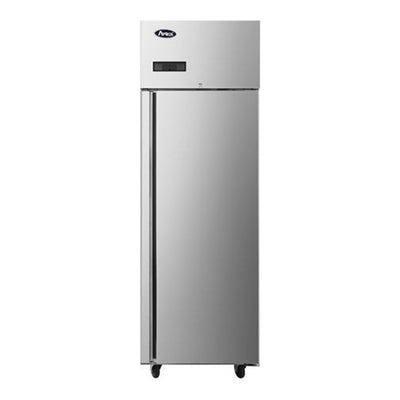 Atosa JBF40RSGR - 1 Door Upright Fridge 654mm 552L
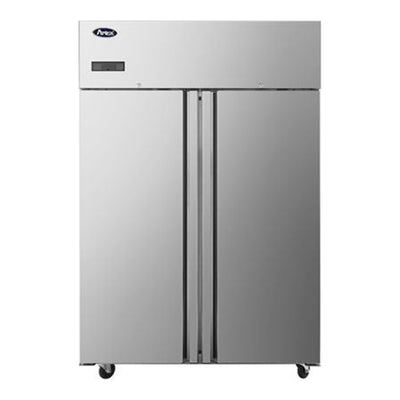 Atosa JBF80RSGR - 2 Door Upright Fridge 1314mm 1090L
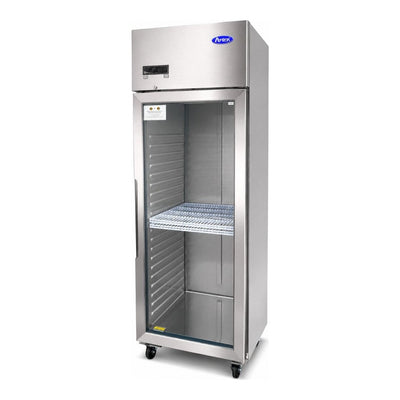 Atosa JCF40RSGR - 1 Glass Door Upright Fridge 654mm 552L
Not sure which model suits you? Ask our team or request a free quote.


