

How to Choose a Commercial Fridge: Types, Sizes and Features Explained
A commercial fridge is a long-term purchase. It will run every hour of the day for ten years or more, so getting the type, size and features right matters more than shaving a little off the price. This guide walks through the questions to ask, the main types of commercial fridge and what each is for, how to size one, and the features that actually make a difference.
Start with four questions
- What are you storing? Drinks, raw ingredients, prepared food, cakes or flowers each suit a different type of fridge.
- Who opens it? If customers see it or serve themselves, you need a display fridge. If only staff use it, a solid door storage fridge is usually cheaper to buy and run.
- Where does it go? Measure the space and the way in, and check how hot the spot gets in summer.
- How much do you need on your busiest day? Not an average day. Overpacked fridges can't keep food cold.
Types of commercial fridge
| Type | Best for |
|---|---|
| Upright fridges | Main storage in kitchens (solid doors) or drinks and grab-and-go display (glass doors). One, two or three doors. |
| Underbench fridges | Working storage under a bench, close to the cook or barista. Doors or drawers. |
| Bar fridges | Bottled and canned drinks behind the bar, usually with glass doors. |
| Prep fridges | Salad, sandwich and pizza prep, with ingredient pans on top and storage below. |
| Chef drawers | Refrigerated drawers under cooking equipment, so ingredients sit right at the line. |
| Cake and food display fridges | Cakes, slices, sandwiches and salads on show at the counter. |
| Countertop display fridges | Small displays on the counter for drinks, cakes or sushi. |
| Multideck display fridges | Self-serve drinks, dairy and grab-and-go food in shops. Glass door or open front. |
| Dual temp fridge freezers | A fridge and freezer in one cabinet, where space is tight. |
| Wine fridges | Wine at serving or cellar temperature. |
| Meat ageing cabinets | Dry ageing meat for butchers and restaurants. |
| Flower fridges | Florists, with display levels built for buckets. |
Need freezers too? See our guide to types of commercial freezers.
Solid doors or glass doors?
Glass doors let customers see the stock and let staff check it without opening the door, but glass lets in more heat than an insulated solid door. A glass door fridge usually costs more to run than a solid door fridge of a similar size. Use glass where display sells product, and solid doors out the back. Open-front fridges with no doors use the most power of all. Our running costs guide compares them.
How to work out the size you need
- Plan for your busiest day, plus a little room to grow.
- Look at shelf sizes, not just litres. Many commercial fridges take standard gastronorm (GN 1/1) trays or pans. If your kitchen works in GN pans, check the fridge fits them.
- Leave room for air. A fridge packed to the brim has warm spots, so don't buy the exact size of your stock.
- Measure the space and the way in: width, depth, height, door swing, and every doorway and corner on the delivery route. Our fridges are delivered by tailgate truck to the front of your premises.
- Think about layout. Two smaller fridges in the right places can work better than one big one at the back.
Features that make a difference
Room temperature rating
Every commercial fridge is designed for a maximum room temperature. Ratings in our range run from about 25°C to 43°C. A fridge rated for 25 or 32°C is fine in an air-conditioned shop, but it will struggle beside a hot cooking line. Choose one rated above the hottest your space gets. See where to put a commercial fridge.
Fan-forced or static cooling
Fan-forced fridges push cold air around the cabinet, recover quickly after the door opens and usually defrost automatically. Static fridges are simpler and quieter but slower to recover. For busy kitchens and display, fan-forced is usually the better choice. Our guide to fan forced vs static cooling explains the difference.
Temperature range and controller
Most commercial fridges run at about +2 to +8°C, which lets you hold food at 5°C or colder. A digital controller makes the temperature easy to read and set, and some models add alarms for doors left open or high temperatures.
Refrigerant
Most newer fridges in our range use natural hydrocarbon refrigerants such as R290 or R600a. They are efficient and have a far lower environmental impact than older refrigerant gases.
Build quality
- Stainless steel inside and out cleans easily and stands up to a busy kitchen. 304-grade stainless resists corrosion better than cheaper grades.
- Self-closing doors save cold air when staff have their hands full.
- Castors make cleaning behind the fridge easy. Feet suit fixed positions.
- Locks are worth having on drinks and display fridges.
Lighting and glass
LED lighting shows off stock and gives off very little heat compared with older fluorescent tubes. For display fridges in humid spots, heated or anti-fog glass helps keep the glass clear.
Energy use
Commercial refrigerated cabinets sold in Australia must meet minimum energy performance standards under the GEMS scheme. To compare running costs, look for the energy use in kWh per 24 hours and put it into our running cost calculator. Two fridges that look similar can differ by hundreds of dollars a year.
Warranty
Warranties differ a lot between brands, for example in years of parts versus labour and whether the compressor gets longer cover. Some also require regular condenser cleaning. The warranty is listed on every product page, so compare it as well as the price.
Budget: purchase price and running costs
The cheapest fridge to buy isn't always the cheapest to own. Running costs over five to ten years can add up to more than the purchase price, especially for display fridges and freezers. Weigh up the price, the running cost, the warranty and the room rating together.
Before you order: a quick checklist
- The right type for what you store and who opens it.
- Sized for your busiest day, with room for air to move.
- A room temperature rating above your hottest conditions.
- The space, clearance, door swing and delivery route all measured.
- The power requirement checked. Most run on a standard 10 amp plug, but check the product page.
- Running costs and warranty compared.
FAQs
What's the difference between a commercial and a domestic fridge?
Commercial fridges are built for doors opening all day, hot kitchens and the temperatures food businesses must hold. They recover faster after the door opens and use tougher materials. A home fridge usually can't keep up in a business.
What size commercial fridge do I need?
Work out what you need to hold on your busiest day, allow space for air to move, and check the shelves fit your containers or GN pans. If you're between two sizes, the bigger one is often the better buy.
Is a glass door fridge more expensive to run?
Usually, yes. Glass lets in more heat than an insulated solid door. Open-front fridges use more again.
Can you help me choose?
Yes. Tell us what you need to store, the space you have and how hot it gets, and we'll help you compare models.
More reading
Shop the range
Browse our upright fridges, undercounter fridges and multideck display fridges, all priced below RRP with delivery Australia-wide.
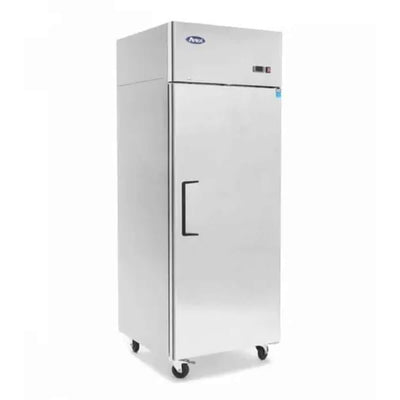 Atosa YBF9206 - Top Mounted Single Door Refrigerator
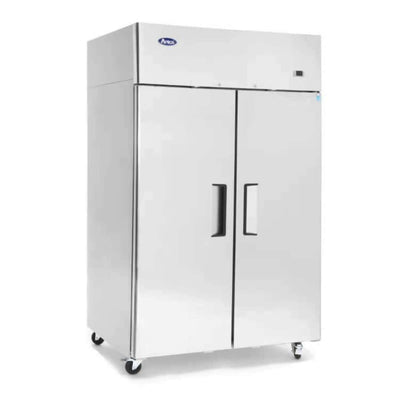 Atosa YBF9218 - Top Mounted Double Door Refrigerator
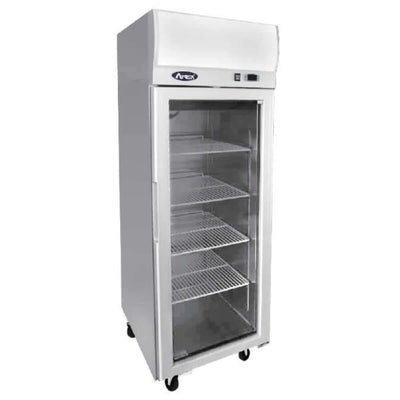 Atosa YCF9401 - Top Mounted Single Door Refrigerator
Not sure which model suits you? Ask our team or request a free quote.


